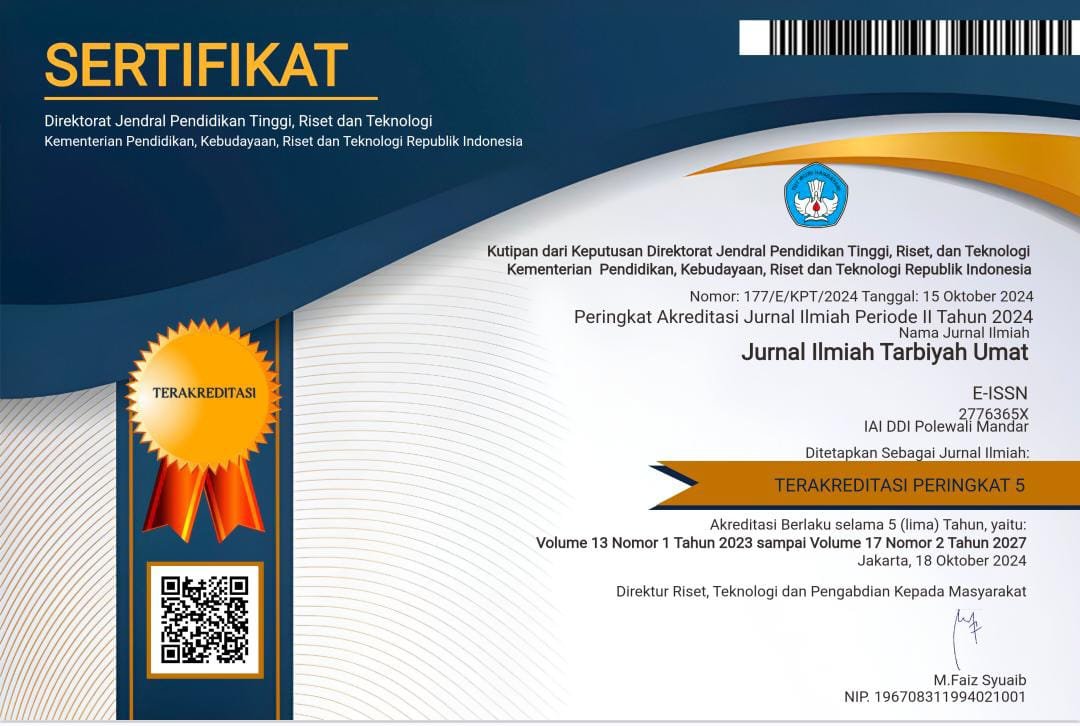
AI-Supported English Vocabulary Instruction Using Quizizz: A Synergy of Digital Learning, Character Education, and Educational Governance
DOI:
https://doi.org/10.36915/jitu.v15i2.481Keywords:
Character Education, Digital Pedagogy, Educational Governance, English Vocabulary Learning, QuizizzAbstract
Artificial Intelligence (AI) has become a central driver of digital transformation in education, particularly in English as a Foreign Language (EFL) learning. This study examines the role of AI-supported learning through the Quizizz platform in enhancing English vocabulary mastery while simultaneously strengthening religious values and educational governance from a Public Administration perspective. Using a comprehensive literature-based analytical approach, this study synthesizes international research on AI, digital pedagogy, and EFL with national studies on English education policy, character education, and public governance. The findings indicate that Quizizz effectively improves vocabulary retention, pronunciation accuracy, learner motivation, and self-regulated learning through adaptive repetition, gamification, and real-time feedback. Beyond linguistic outcomes, the integration of religious values within AI-based instruction fosters ethical awareness, learning discipline, and social responsibility among students. From a governance perspective, AI-supported learning platforms enhance transparency, accountability, and evidence-based decision making through digital documentation and learning analytics. This study concludes that the integration of Artificial Intelligence, EFL vocabulary learning, religious values, and public governance constitutes a comprehensive and sustainable framework for developing ethical, accountable, and high-quality digital education.
Downloads
Published
How to Cite
Issue
Section
License
Copyright (c) 2025 Abdul Muis Said, Suryani Jihad, Muhammad Rusydi

This work is licensed under a Creative Commons Attribution-NonCommercial-ShareAlike 4.0 International License.